An employee on $90,000 a year does not cost you $90,000, and they do not cost you $45.55 an hour. Once you add super, workers’ comp, leave loading, overheads and the hours nobody can bill, the real number is closer to $95 for every hour you can actually charge for.
Here is how to work it out for anyone on your team, step by step, using Australian rules.
The quick answer
True cost per billable hour = total yearly cost of the employee ÷ billable hours per year
For a $90,000 employee that is $121,362 ÷ 1,277 hours = $95.05.
Want to skip the maths? Use our free charge-out rate calculator, pick Australia and choose One employee.
Step 1: Add the costs on top of salary
| Cost | How to work it out | Example |
|---|---|---|
| Salary | Gross yearly pay (ordinary time earnings) | $90,000 |
| Superannuation guarantee | 12% of ordinary time earnings (the rate from 1 July 2025) | $10,800 |
| Workers’ compensation | Premium set by your state scheme and industry. The example uses 1.5% | $1,350 |
| Annual leave loading | 17.5% on 4 weeks’ leave, if the award or agreement includes it | $1,212 |
| Overhead loading | Share of rent, software, equipment, admin and management, as a % of salary. The example uses 20% | $18,000 |
| Total yearly cost | $121,362 |
Payroll tax: each state and territory charges payroll tax once your total Australian wages pass its threshold, and thresholds and rates differ. If you are over the threshold, add your effective rate to the on-costs. Most small agencies and consultancies are under it, so the example leaves it out.
From 1 July 2026, Payday Super means super is paid with each pay run rather than quarterly. It changes cash flow, not the yearly cost.
Step 2: Work out the hours they are actually at work
A full-time week under the National Employment Standards is 38 hours, so 38 × 52 = 1,976 paid hours. But some of those weeks are paid leave.
| Weeks | |
|---|---|
| Weeks in a year | 52 |
| Annual leave (4 weeks) | − 4 |
| Public holidays (about 11 days, varies by state) | − 2.2 |
| Personal/carer’s leave (allow 5 of the 10 days) | − 1 |
| Weeks at work | 44.8 |
44.8 weeks × 38 hours = 1,702 hours at work. That is $121,362 ÷ 1,702 = $71.29 per hour worked.
Step 3: Allow for time you cannot bill
Even at work, nobody bills every hour. Meetings, admin, training, sales and internal projects all take time. If this person bills about 75% of the hours they are at work:
1,702 × 0.75 = 1,277 billable hours, so $121,362 ÷ 1,277 = $95.05 per billable hour.
That is the employee’s real cost rate. Charge less than this and every hour they bill loses money.
A shortcut that lands in the same place
Skip Step 2 and use 1,976 hours with a lower billable %, around 65%, to cover leave and non-billable time together. $121,362 ÷ 1,976 ÷ 0.65 = $94.49. Close enough for pricing, and it is what our calculator uses.
From true cost to charge-out rate
To make a 25% margin on this person’s time, divide the cost rate by 0.75: $95.05 ÷ 0.75 = $126.74 an hour. Not sure why it is 0.75? See margin vs markup, or read the full method in how to calculate your charge-out rate.
Common mistakes
- Dividing salary by 1,976. $90,000 ÷ 1,976 = $45.55, less than half the true cost of a billable hour.
- Forgetting super and leave loading. Together they add around 13% before any overhead.
- Ignoring payroll tax once you grow. Crossing your state’s threshold changes the cost of every hire.
- Assuming everyone is 100% billable. Track it, then use the real figure.
Track real cost on every project
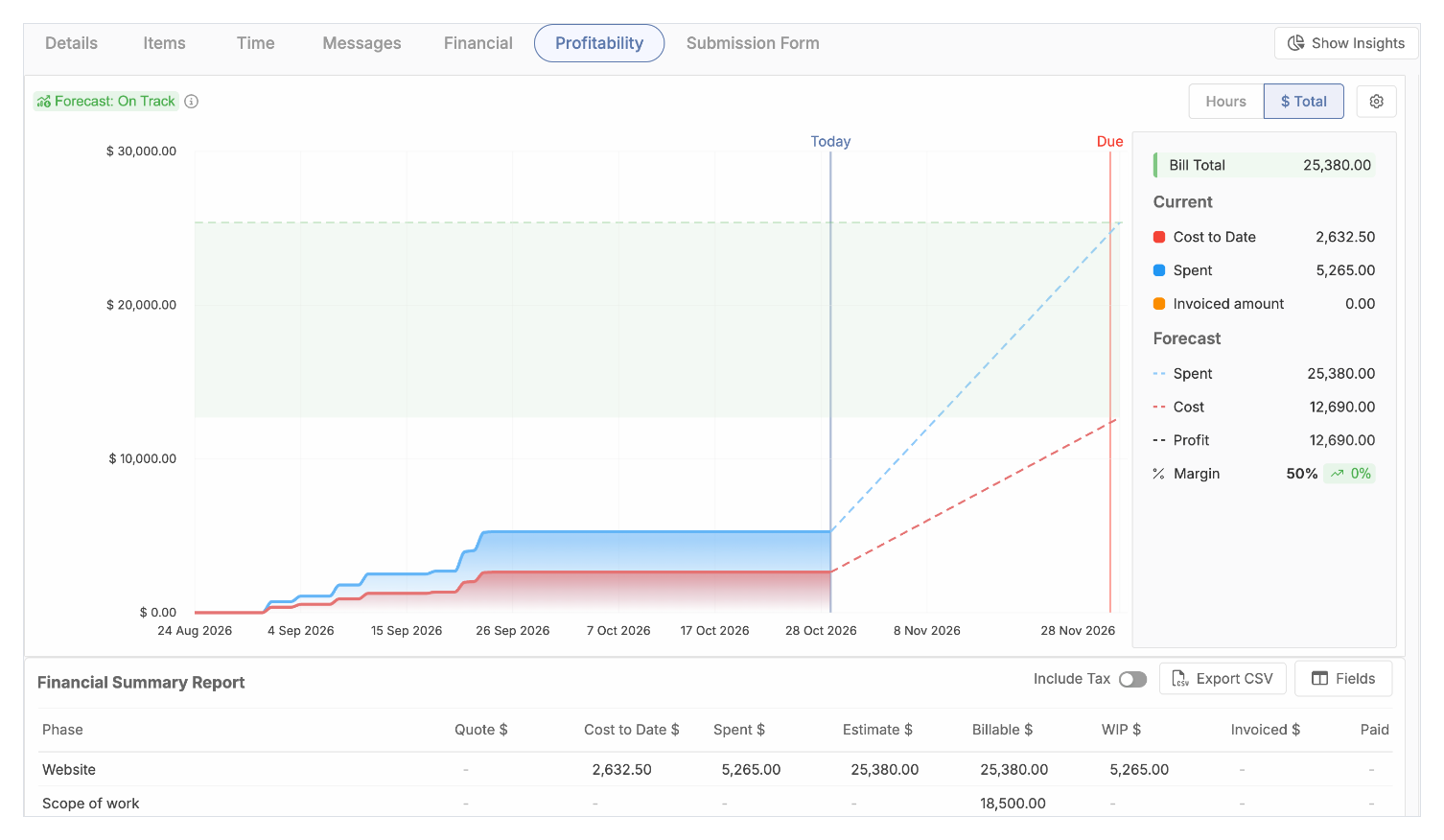
In ProWorkflow you can set a cost rate for each staff member, so every hour they log is costed at their true rate. Project profitability then shows live cost, spent and margin as the work happens. See how to set up cost and charge rates.
Working with a team in New Zealand or the US too? See the New Zealand version and the US fully burdened labor rate guide.
FAQ
How much does an employee really cost in Australia?
In our example, a $90,000 employee costs $121,362 a year, about 35% more than their salary, once super, workers’ comp, leave loading and a 20% overhead loading are added. Per billable hour that is $95.05, more than double the $45.55 you get by dividing salary by 1,976.
What is the super guarantee rate?
12% of ordinary time earnings from 1 July 2025. From 1 July 2026 it must be paid with each pay (Payday Super). Check the ATO for current rules.
How many working hours are in a year in Australia?
1,976 paid hours for a 38-hour week, but about 1,700 hours at work once annual leave, public holidays and some personal leave are taken out.
Do I need to include payroll tax?
Only if your total Australian wages are over your state or territory’s threshold. If they are, add your effective rate to the on-costs.
What billable % should I use?
Use your own timesheet data. Track a month of billable hours against hours worked. This is where a project management tool like ProWorkflow helps: every hour is logged against a project or task, so you can see your real billable % and base pricing decisions on accurate data, not assumptions.